 NEUROBATIC
28 OCTOBER 2026 · JOURNEY · REVIEW WINDOW: 21–27 OCTOBER 2026
Physical AI moves deeper into the deployment stack
This week’s meaningful progress connects robot learning, onboard computing, force feedback and factory validation. The practical test is whether those pieces produce repeatable work under real operating conditions.
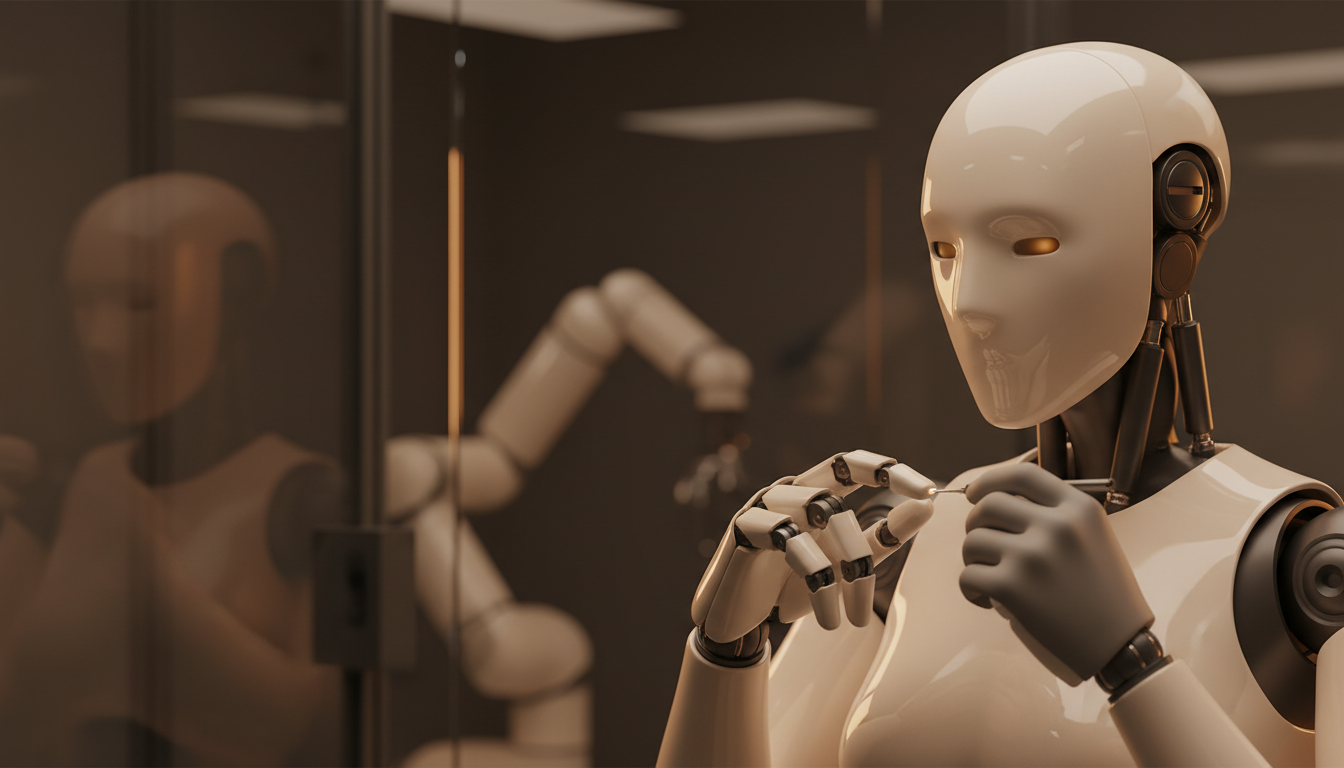
Neurobatic editorial imagery.
01 · A more connected robotics toolchain
On 21 October, NVIDIA announced Isaac Lab 3.0, the Isaac OS runtime and the Agile ONE SN research humanoid. NVIDIA states that the humanoid is scheduled for early 2027; Halos safety integration is planned. These are development-platform announcements, not evidence of a certified household product. NVIDIA announcement ↗
02 · Onboard computing becomes an integration priority
In its 21 October announcement, Humanoid reports consolidating two onboard computers into one using Jetson Thor while maintaining computing capacity. Its broader sensor and runtime integration remains development work. The reported consolidation does not establish independent gains in task reliability. Humanoid announcement ↗
03 · Coding agents gain a sense of contact
FORCA, submitted to arXiv on 22 October, uses vision and wrist force/torque measurements to write and revise robot-control programs. The authors report tests across five real-robot tasks and improvements over their vision-only variant. This is a research preprint with author-reported results, not independently replicated deployment evidence. Original paper ↗
04 · Factory validation moves earlier
On 21 October, TÜV SÜD and Accenture presented a proposed Physical AI Safety Suite using digital twins, simulation and AI agents. The announced approach assesses layouts, fleets and individual robots; TÜV SÜD retains certification responsibility. The announcement does not certify a particular robot or installation. Accenture announcement ↗
Neurobatic analysis · What adoption requires
Households. Force-aware control is relevant to handling and cleaning, but a laboratory result does not establish safe unsupervised home operation. Evaluate object damage, recovery from unexpected contact, intervention frequency and privacy in the intended home.
Corporate environments. Simpler onboard computing could ease maintenance. Procurement still needs measured response times, network-loss behavior, access controls, update rollback and a named support owner. Assess complete service workflows rather than processor specifications.
Factories. Test layouts and mixed human–robot traffic before installation. Tie simulation to site measurements, then validate throughput, stoppages and recovery on the actual line. Keep AI-generated control changes within reviewed deployment permissions.
Official video
Robots Steal the Show at NVIDIA GTC Berlin ↗ — linked in NVIDIA’s official event coverage on 23 October, covering the 20–22 October event. Demonstration footage provides context; it is not a controlled reliability test.
2026年10月28日 · JOURNEY · 回顾期:2026年10月21日至27日
物理人工智能深入部署环节
本周的重要进展,将机器人学习、机载计算、力反馈与工厂验证连接起来。实际衡量标准,是这些环节能否在真实运行条件下支持稳定、可重复的工作。
01 · 更连贯的机器人开发工具链
NVIDIA于10月21日发布Isaac Lab 3.0、Isaac OS运行时及Agile ONE SN研究型人形机器人的相关公告。公告称,该机器人计划于2027年初供应,Halos安全系统集成仍属规划。这些是开发平台进展,并不构成家用产品已获认证的证据。NVIDIA原始公告 ↗
02 · 机载计算成为系统集成重点
Humanoid在10月21日的公告中表示,通过Jetson Thor将两台机载计算机整合为一台,并维持计算能力。更广泛的传感器及运行时集成仍在开发中。该公司报告的硬件整合,并不能独立证明任务可靠性已提高。Humanoid原始公告 ↗
03 · 编程智能体引入力反馈
10月22日提交至arXiv的FORCA研究,利用视觉与腕部力/力矩测量来编写和修订机器人控制程序。作者报告了五项真实机器人任务测试,并称其表现优于仅使用视觉的对照版本。这是研究预印本及作者报告的结果,并非经过独立复现的部署证据。原始论文 ↗
04 · 工厂验证前移
TÜV SÜD与埃森哲于10月21日介绍拟议的Physical AI Safety Suite,通过数字孪生、仿真及AI智能体评估厂区布局、机器人群与单台机器人。认证责任仍由TÜV SÜD承担。这项公告不代表任何特定机器人或现场安装已获认证。埃森哲原始公告 ↗
灵动天工分析 · 落地应用的关键
家庭。力反馈控制与物品处理、清洁任务密切相关,但实验室结果不足以证明无人监督的家用安全性。应在实际家庭环境中评估物品损伤、意外接触后的恢复、人工介入频率及隐私保护。
企业场景。更简化的机载计算架构可能降低维护复杂度。采购仍须核验响应时间、断网行为、访问控制、更新回滚机制及明确的服务责任方。评估应覆盖完整服务流程,而非仅看处理器参数。
工厂。安装前验证布局与人机混行路线,将仿真结果与现场测量对应,再在实际产线上核验产能、停机及恢复表现。AI生成的控制变更必须纳入经过审核的部署权限。
官方视频
NVIDIA GTC Berlin机器人展示 ↗:NVIDIA于10月23日在官方活动报道中链接该视频,所涉活动于10月20日至22日举行。演示视频用于了解技术背景,并非受控可靠性测试。
The Neurobatic adoption path · 灵动天工应用路径
Neurobatic’s 2028–2030 roadmap remains a target. Deployment planning centers on defined tasks, measured pilots and human oversight. The developments reviewed here do not establish Neurobatic product capabilities, certification or affiliations.
灵动天工2028–2030年路线图仍为目标。部署规划以明确任务、可衡量试点及人工监督为核心。本期介绍的行业进展,不构成灵动天工产品能力、认证或合作关系的证明。

